


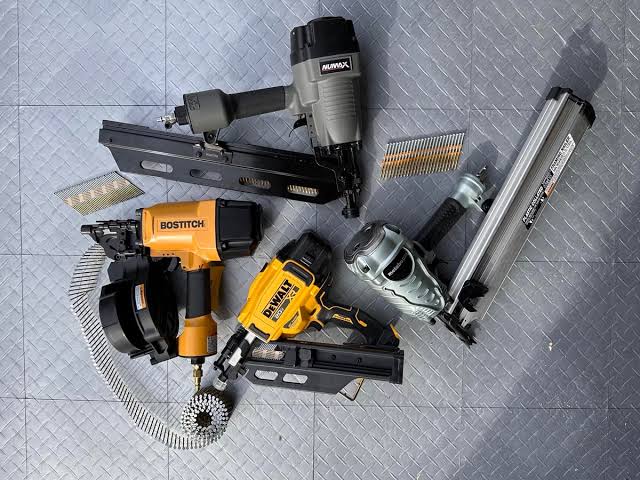
Choosing the right tool for a construction project can make the difference between a smooth, efficient build and one riddled with costly mistakes and delays. When it comes to fastening tasks—whether you’re assembling wall frames, securing shingles, or finishing delicate trim work—nail guns stand out as one of the most essential tools in any contractor’s arsenal. Each application demands a different type of nailer, and understanding those differences is the foundation of professional-grade work.
Why the Right Nailer Matters for Every Job
Not all fastening tasks are created equal. Framing requires driving large, heavy-duty nails deep into structural lumber. Roofing demands speed, weather resistance, and precision angling. Trim work calls for delicate, nearly invisible fasteners that won’t split fine wood. Using the wrong tool for any of these jobs doesn’t just slow you down—it can compromise structural integrity or ruin the appearance of finish work entirely.
Professional carpenters, roofers, and framers understand that tool selection is a skill in itself. A well-matched nailer reduces fatigue, improves accuracy, and significantly increases productivity on the job site.
Framing Nailers: Built for Heavy-Duty Structural Work
Framing nailers are the workhorses of residential and commercial construction. Designed to drive long, thick nails into dimensional lumber, these tools handle tasks like building wall frames, floor joists, roof trusses, and decking substructures.
What Makes a Framing Nailer Stand Out?
The most critical features to evaluate in a framing nailer include:
Nail capacity and magazine angle: Framing nailers typically accept nails in a clipped-head or full-round-head configuration. Many building codes require full-round-head nails for structural applications, so verifying compatibility before purchasing is essential.
Drive power: Framing requires consistent, deep nail penetration. Pneumatic models remain the gold standard for raw power, though cordless brushless-motor models have closed the gap considerably in recent years.
Depth adjustment: A tool-free depth adjustment wheel allows framers to dial in nail depth quickly across different lumber types without reaching for extra tools.
Jam-clearing mechanism: On high-volume framing jobs, nail jams happen. Tools with easy-access jam-clearing features save significant time over the course of a workday.
Durability is equally important. Framing nailers endure rough handling, exposure to sawdust, and repeated drops on job sites. Models with magnesium housings offer an excellent balance of strength and reduced weight, minimizing user fatigue during extended use.
Roofing Nailers: Speed and Precision Under the Sun
Roofing is one of the most physically demanding applications for any nailer. Working at height, often in direct sunlight, roofers need a tool that operates quickly, consistently, and comfortably over long shifts.
Key Features to Prioritize in a Roofing Nailer
Roofing nailers are specifically engineered for driving coil nails into asphalt shingles, underlayment, and roof decking. The coil magazine design holds a significantly larger quantity of fasteners than a stick magazine, reducing the frequency of reloads and maintaining workflow momentum.
Other features worth examining include:
Adjustable shingle guides: A well-designed roofing nailer includes a guide that helps maintain consistent nail placement across each shingle row, which is critical for both aesthetic uniformity and weather resistance.
Contact vs. sequential trigger: For roofing, contact actuation (also called bump firing) allows rapid, repeated nailing with each press of the nose against the surface. This dramatically increases fastening speed on large roof sections.
Lightweight construction: Even a few extra ounces becomes noticeable after hours of work on a sloped surface. Compact, well-balanced roofing nailers reduce strain and improve control.
Tool-free depth-of-drive adjustment: Shingle thickness and roof deck density can vary. Being able to adjust drive depth quickly without interrupting workflow is a practical necessity.
Weather resistance also matters. Roofing nailers are exposed to heat, humidity, and occasional moisture. Models with sealed internal mechanisms and corrosion-resistant components last significantly longer in these conditions.
Trim Nailers: Precision for the Finishing Touches
Once the structure is complete and the roof is secured, trim work brings a project to life. Crown molding, baseboards, door casings, chair rails, and window trim require fasteners that hold securely without splitting delicate wood or leaving visible marks.
Brad Nailers vs. Finish Nailers for Trim
The two primary tools used for trim installation are brad nailers and finish nailers, each suited to different situations.
Brad nailers drive thin-gauge nails that leave minimal surface holes. They excel at attaching lightweight trim pieces, thin moldings, and decorative elements where holding power is less critical than surface appearance.
Finish nailers drive slightly thicker nails and offer considerably more holding strength. These are the preferred choice for baseboards, door casings, and heavier crown molding where long-term fastening integrity matters.
What to Look for in a Trim Nailer
Nail gauge compatibility: Confirm that the nailer accepts the correct gauge for your specific trim material.
No-mar tip: Protective nose tips prevent the tool from denting or scuffing finished wood surfaces—a small detail that makes a meaningful difference on visible trim.
Selective actuation: For precise trim placement, sequential (single-shot) actuation offers the control needed to position each nail exactly where intended.
Compact body design: Trim work often requires nailing in tight corners and confined spaces. A slim, ergonomic body profile makes these areas far more accessible.
Cordless trim nailers have become particularly popular for trim installation, as the absence of an air hose improves maneuverability around furniture, doorways, and architectural details.
Selecting the Right Tool for Your Specific Application
The most effective approach to nailer selection begins with a clear understanding of the task at hand. Framing jobs prioritize power and durability. Roofing demands speed, capacity, and weather resistance. Trim installation calls for precision, surface protection, and ergonomic control.
Professionals who invest time in evaluating these criteria—rather than defaulting to a single all-purpose nailer—consistently achieve better results, experience fewer tool-related setbacks, and deliver higher-quality finished work.
Building Better Starts with the Right Equipment
Every successful construction project rests on a foundation of smart tool choices. Whether you’re raising walls, securing a roof, or adding the final trim details that define a space, the right nailer transforms each phase of the work. Take time to match the tool to the task, prioritize build quality and application-specific features, and the results will reflect that commitment at every stage of the build.