


Cash flow is one of the most important financial concerns for any business. Even profitable companies can experience financial pressure when customer payments arrive late, invoices take too long to process, or payment procedures require excessive administrative work. For this reason, selecting suitable b2b payment methods has become an important part of effective financial management.
Business-to-business transactions can involve suppliers, distributors, contractors, service providers, and corporate customers. Each relationship may have different payment expectations. Choosing payment options that are reliable, convenient, secure, and aligned with business requirements can make it easier to maintain predictable cash flow while reducing unnecessary financial administration.
Understanding the Connection Between Payments and Cash Flow
Cash flow depends not only on how much money a company earns but also on when money enters and leaves the business. A company may have substantial outstanding invoices but still struggle to pay its own expenses if customer payments are delayed.
Efficient payment processes can shorten the time between invoicing and receiving funds. They can also help businesses understand which invoices have been paid, which are pending, and which require follow-up.
When businesses evaluate b2b payment methods, they should therefore look beyond transaction convenience. The objective should be to create a payment process that supports predictable financial operations.
Evaluate Payment Speed
Payment speed can have a direct impact on working capital. Traditional payment processes may sometimes involve multiple manual steps, while digital options can make transactions easier to initiate and track.
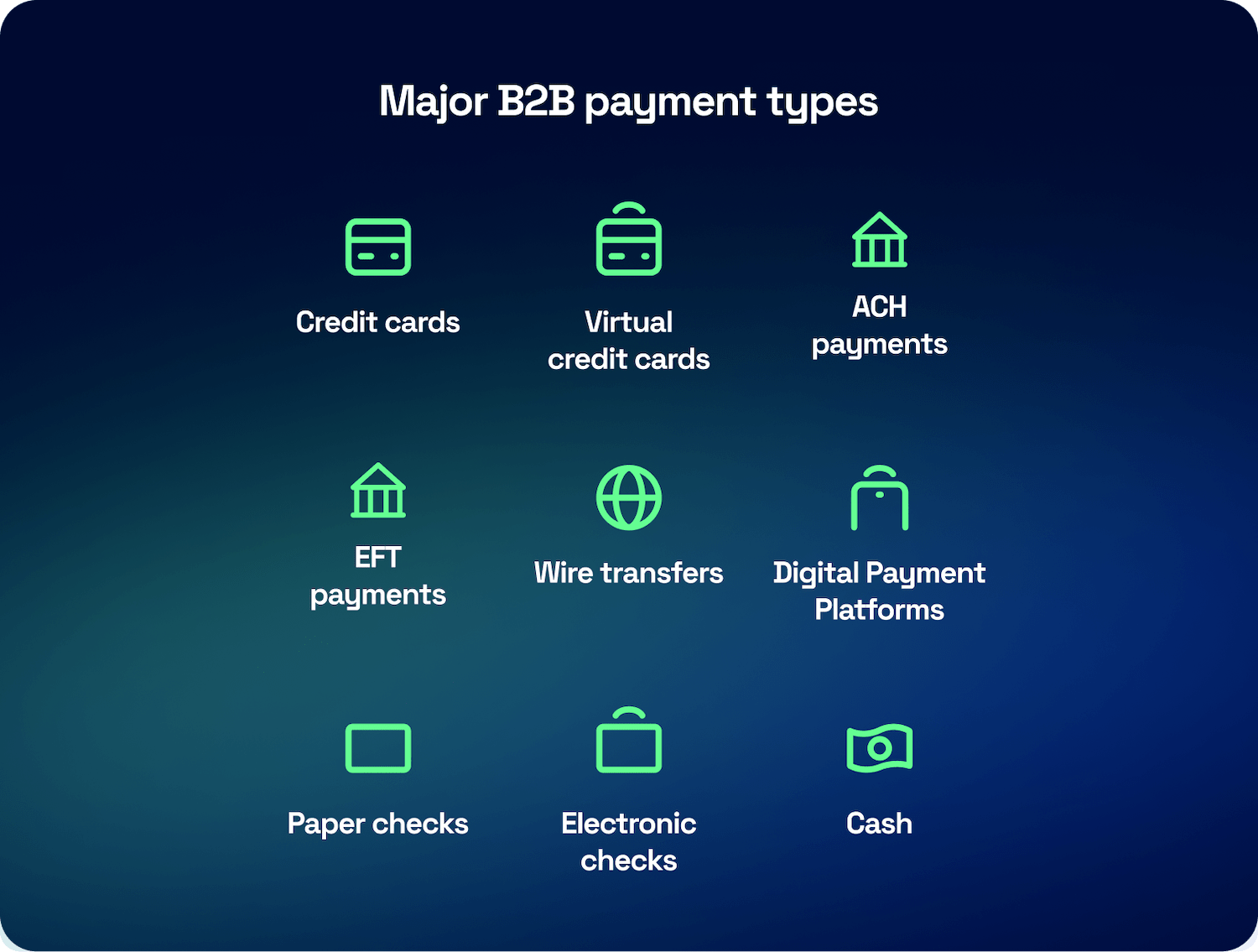
Bank transfers, automated clearing systems, business cards, virtual payment solutions, and online payment platforms can each serve different purposes. The most suitable option depends on factors such as transaction size, business relationships, processing times, and geographic location.
Companies should determine how quickly they need funds to become available and whether a particular payment method supports those requirements. Faster payments can be particularly valuable for businesses that operate with tight working-capital cycles.
Consider Transaction Costs
Every payment method can have associated costs. These may include transaction fees, processing charges, currency conversion costs, or other expenses.
However, businesses should not automatically choose the option with the lowest visible transaction fee. A cheaper payment method may require more manual administration, reconciliation, or follow-up work. Those additional tasks can increase the overall cost of processing payments.
A better approach is to consider the total cost of a payment process. Businesses can compare direct fees with administrative time, processing efficiency, error rates, and the resources required to manage transactions.
Support Faster Invoice Collection
The payment process begins before a transaction is actually made. Clear invoices, accurate payment instructions, and convenient payment options can make it easier for customers to settle their balances.
Businesses should make sure invoices contain essential information and that customers understand how to make payments. Providing appropriate payment choices can remove unnecessary friction.
For example, some corporate customers may prefer bank transfers, while others may use business cards or digital payment platforms. Giving customers practical choices can encourage timely payments without making the accounts receivable process unnecessarily complicated.
Improve Payment Visibility
Cash flow management becomes more difficult when financial teams cannot easily determine the status of transactions.
A strong payment process should provide clear records of outgoing and incoming payments. Businesses need to know which invoices have been paid, which transactions are pending, and where discrepancies may exist.
Better visibility can help accounting teams update records more efficiently and identify potential collection issues earlier. It can also make financial forecasting more accurate because managers have a clearer understanding of expected incoming funds.
Match Payment Methods to Business Relationships
There is no single payment method that works equally well for every B2B relationship. A small recurring supplier payment may require a different approach from a large international transaction.
Businesses should consider the preferences and requirements of their suppliers and customers. Payment expectations can vary according to industry, location, contract terms, transaction value, and frequency.
When selecting b2b payment methods, companies should consider whether the chosen options work for their most important business relationships. A flexible payment strategy can make it easier to manage different types of transactions without creating unnecessary complexity.
Think About Security
Financial transactions require strong attention to security. Businesses handle sensitive information involving invoices, bank accounts, payment credentials, and transaction records. Weak processes can increase exposure to fraud, unauthorized transactions, and payment errors.
Companies should assess the security practices associated with every payment method they use. Authentication, authorization, transaction monitoring, access controls, and employee awareness can all contribute to safer payment operations.
Businesses should also establish internal procedures for verifying payment requests. This is especially important when receiving unexpected instructions to change supplier banking information or redirect payments.
Integrate Payments With Financial Systems
Manual data entry can create delays and increase the possibility of errors. When payment processes can connect with accounting or financial management systems, businesses may be able to reduce repetitive administrative work.
Integration can help synchronize invoices, transaction records, and payment information. It can also make reconciliation easier because financial teams have better access to consistent transaction data.
When comparing b2b payment methods, companies should therefore ask whether the option can fit into their existing technology environment. A payment solution that works well technically can provide greater long-term value than one that operates separately from the rest of the company’s financial processes.
Prepare for International Transactions
Companies working with international suppliers or customers may need to consider additional factors. Currency conversion, international transfer times, exchange rates, and cross-border transaction costs can influence cash flow.
Businesses should evaluate whether their chosen payment options are suitable for international operations. They should also understand the costs and processing requirements associated with different currencies and markets.
Planning for international payments in advance can help companies avoid unexpected expenses and improve their ability to forecast cash requirements.
Use Technology to Reduce Administrative Work
Modern businesses increasingly rely on digital tools to simplify financial operations. Automated payment reminders, digital invoices, transaction tracking, and electronic reconciliation can reduce the amount of manual work required from accounting teams.
The goal is not simply to automate every financial task. Instead, businesses should identify repetitive activities that consume time without adding significant strategic value.
Resources such as paytechtrust.com can also be considered when researching the broader B2B payment landscape and understanding the role that payment technology can play in modern business operations.
Review Payment Performance Regularly
Choosing payment methods should not be a one-time decision. Business needs change as companies grow, enter new markets, add suppliers, or increase transaction volumes.
Financial teams should periodically review payment performance. Useful questions include:
- Are customers paying within agreed terms?
- Are payment processing costs reasonable?
- Are there frequent transaction errors?
- Is reconciliation taking too much time?
- Are suppliers satisfied with available payment options?
- Can the current system handle higher transaction volumes?
- Are security procedures strong enough?
These questions can reveal opportunities to improve the company’s payment strategy.
Building a More Predictable Cash Flow Strategy
Efficient b2b payment methods can contribute to healthier cash flow by improving payment speed, reducing administrative friction, increasing transaction visibility, and supporting better financial planning.
The best approach is rarely about selecting one universal payment option. Instead, businesses should create a payment strategy based on their transaction volumes, customer expectations, supplier requirements, costs, security needs, technology infrastructure, and future growth plans.
A carefully designed payment process can help businesses spend less time managing routine transactions and more time focusing on important financial decisions. As digital business payments continue to evolve, companies that regularly evaluate their payment processes will be better positioned to maintain efficient operations and stronger control over cash flow.